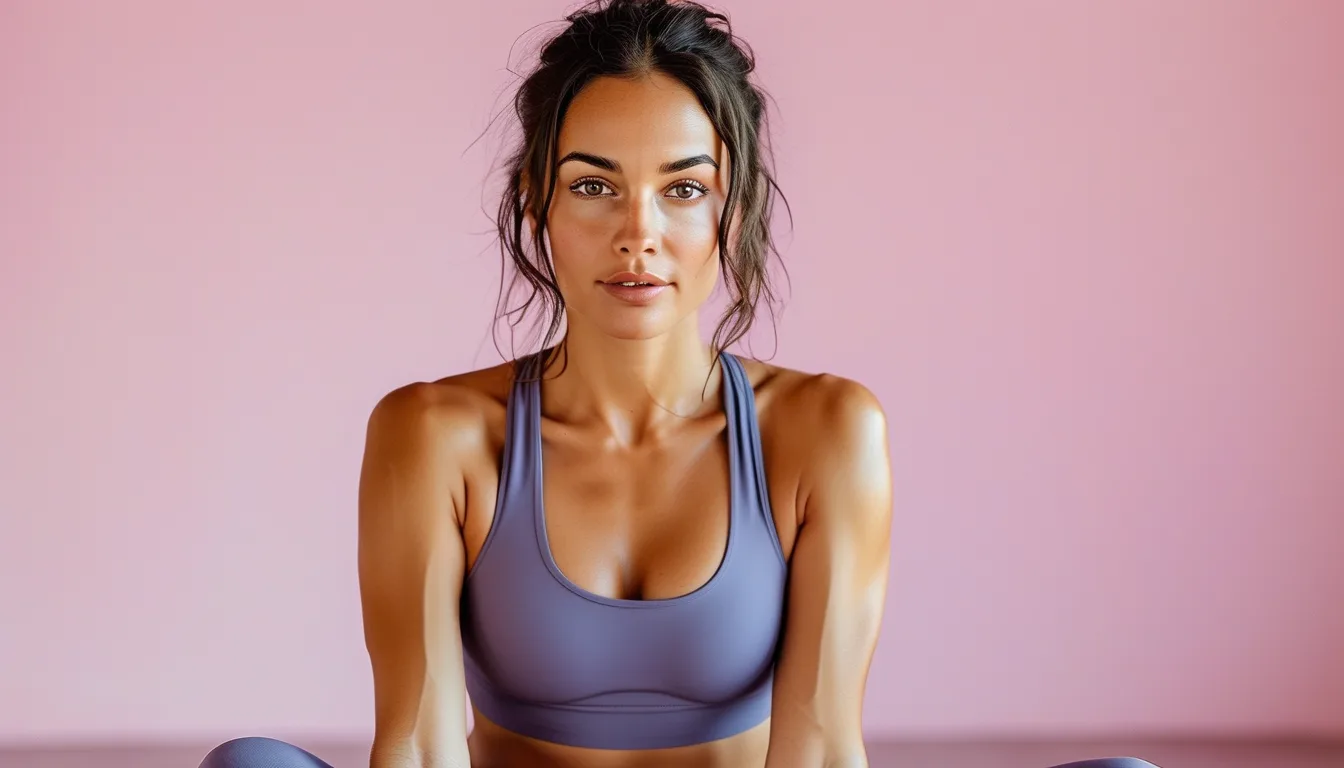
Why Your Makeup Holds in the Gym and Fails on the Walk Home
Quick Answer: You keep sweating for a while after you stop moving, and post-exercise sweat sits on the skin rather than evaporating during activity. Combined with the natural oils that rise as your skin stays warm, that produces a slow flood exactly when you have stopped paying attention. The fix is a single blot at the ten-minute mark, not a heavier product. Blot, do not wipe, and do it before you leave the building.
The workout is not what breaks your makeup.
The twenty minutes afterwards is.
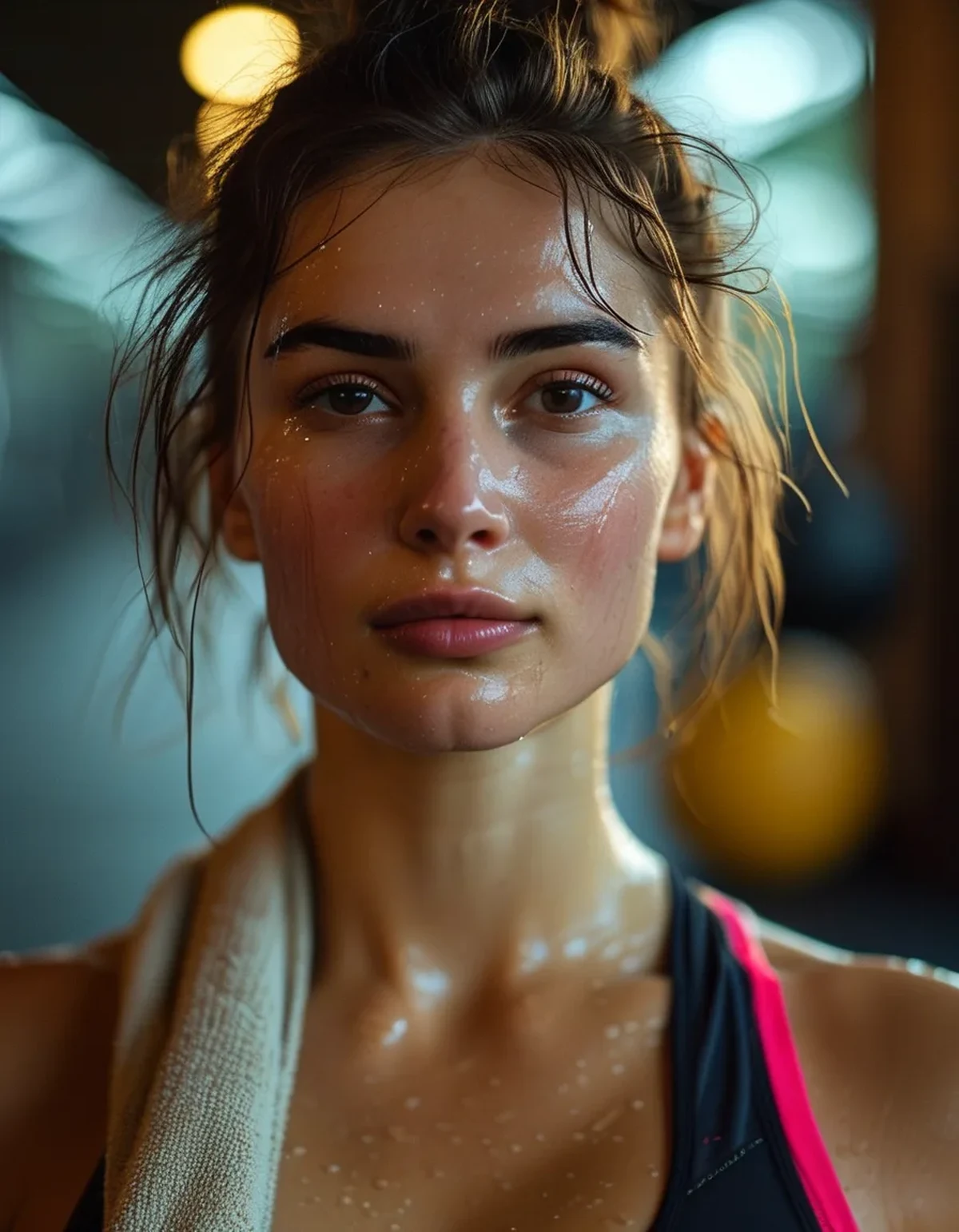
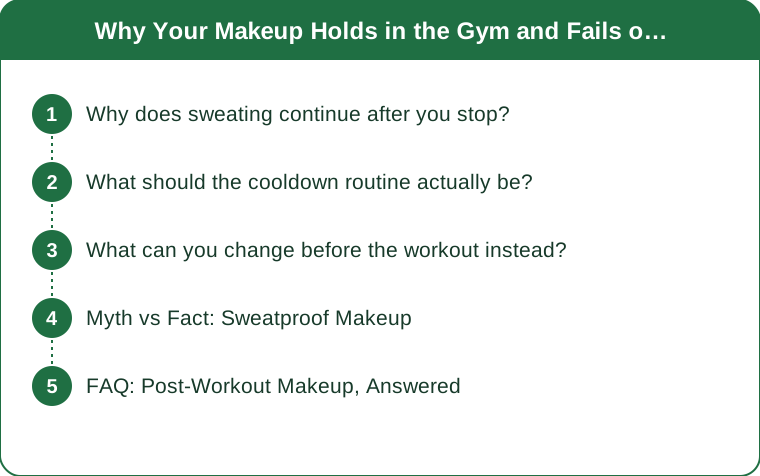
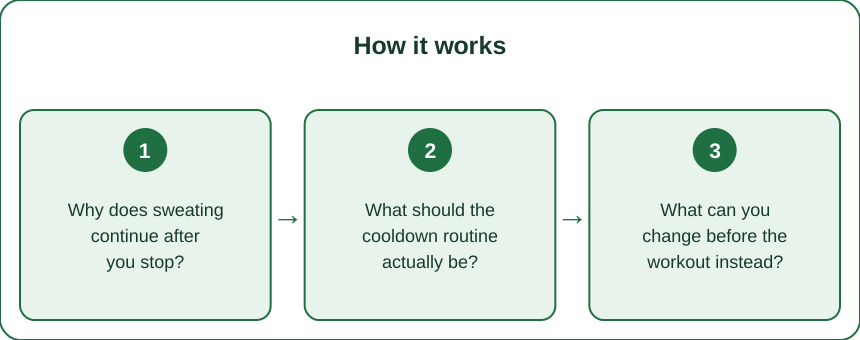
Why does sweating continue after you stop?
Because your core temperature is still elevated and your body is still working to bring it down.
Heat dissipation lags exertion. Your core temperature keeps rising for a while after a hard effort and then falls slowly, and sweating continues for as long as your body is shedding that heat. The sweat rate can stay meaningfully elevated for ten to twenty minutes after you have stopped.
But the airflow stops immediately. During exercise, air movement across your skin evaporates sweat as it appears. Standing in a changing room, sweat pools instead of evaporating - and pooled liquid is what lifts product off skin.
Your skin also stays warm and produces more oil. Sebum production increases with skin temperature, and warm skin holds that elevated rate long after you have stopped moving. Oil is what dissolves and breaks down a makeup base.
Then the hot shower makes it worse for some people. Heat plus steam extends the warm-skin phase considerably. A cooler final rinse ends the cycle faster, which is the reason it is worth the discomfort.
And this is precisely when you stop attending to it. You checked in the mirror mid-session and looked fine, then stopped checking. The failure happens in the window where nobody is looking.
What should the cooldown routine actually be?
Three small actions in the first fifteen minutes, none of which involve adding product.
Blot at the ten-minute mark. Blotting paper or a clean tissue, pressed and lifted - never dragged. Pressing removes the liquid and leaves the product; wiping removes both. This single action does most of the work.
Blot in the order of oiliness. Forehead, nose, chin, then the sides of the nose and the inner cheeks. The T-zone is where the flood starts, and dealing with it first stops it spreading.
Cool your skin actively. A cool damp cloth on the back of the neck and the inner wrists brings core temperature down faster than waiting does. Ending the sweat response is more effective than managing its output.
Wait before you touch up anything. Applying powder onto skin that is still sweating produces a patchy, gritty finish within minutes. Wait until the skin actually feels dry - usually fifteen to twenty minutes after you stop.
Then use the minimum. A light press of powder on the T-zone only, and a cream product on the cheeks if you need colour. Powder over powder on damp skin is what creates the cakey look people blame on the original application.
And keep the kit in your bag permanently. Blotting papers, one small powder, one cream blush stick. A routine that depends on remembering to pack it does not happen twice.

What can you change before the workout instead?
Four choices at application time that make the cooldown far less eventful.
Go lighter at the base than feels right. Thin layers bind to skin; thick ones sit on top and float off as a sheet when the surface gets wet. A tinted moisturiser survives a cooldown better than a full-coverage foundation, almost regardless of what either claims.
Use a gel or water-based primer, not a silicone-heavy one. Silicone primers feel excellent and can trap sweat underneath, which lifts everything at once. Gel primers grip better on skin that is going to get wet.
Set only where you flood. Powder across the whole face makes dry areas look worse without helping. T-zone and the sides of the nose is the whole job.
Choose cream over powder for colour. Cream blush and cream bronzer move with the skin and survive moisture far better than powder equivalents, which lift and streak. This is the highest-impact single swap.
Skip the heavy under-eye concealer. The under-eye area moves constantly and creases as soon as it gets damp. A thin layer, set with the smallest amount of powder, or nothing at all.
And let it set before you start. Ten minutes between application and the first bead of sweat makes a substantial difference to how well anything adheres. Doing your makeup in the changing room immediately before class is the worst possible timing.
Myth vs Fact: Sweatproof Makeup
Myth: waterproof and sweatproof are the same thing. Fact: they are not. Waterproof formulas resist plain water; sweat contains salt and oils that break down different bonds. A waterproof mascara can still smudge from sweat, which is why the two claims are worded differently.
Myth: more setting spray means more hold. Fact: past a light even mist, extra spray re-wets the layers underneath and can make things worse. One pass at arm’s length, allowed to dry fully, is the whole technique.
Myth: powder fixes a sweaty face. Fact: powder applied to wet skin absorbs the liquid and turns to paste. Blot first, then powder - the order is the entire trick, and doing it backwards is the most common single error.
Myth: primer is optional. Fact: on skin that will get wet, primer is doing the actual adhesion work. It matters far more for a workout face than for a normal one.
Myth: you should reapply right after the session. Fact: applying to still-sweating skin guarantees a patchy result within ten minutes. Cool down first, blot, then decide whether you need anything at all.
Myth: heavier coverage lasts longer. Fact: thickness reduces adhesion. Thin layers bind; thick layers slide - which is why a full-coverage base often looks worse after a workout than a light one does.
FAQ: Post-Workout Makeup, Answered
Should I just take it all off after the gym?
If you can, yes - a clean face plus moisturiser and sunscreen is better for your skin than a repaired one. The routine above is for the days when you are going straight somewhere else, which is most people’s actual situation.
Why does my makeup look worse an hour later, not immediately?
Because oil production stays elevated while your skin is warm, and oil breaks the base down gradually. The one-hour mark is usually the peak of the effect, which is why blotting early matters more than touching up late.
Do I need special gym makeup products?
No. A gel primer, a light base, cream colour, and blotting papers covers it, and most of those are things people already own. The change is in the order and the timing, not in the shopping list.
TL;DR:
- You keep sweating for ten to twenty minutes after stopping, with no airflow to evaporate it.
- Warm skin also produces more oil, which dissolves your base right when you stop checking.
- Blot at the ten-minute mark - press and lift, never wipe.
- Wait until skin is genuinely dry before any touch-up, or powder turns to paste.
- Cream colour over powder, thin base over full coverage are the two highest-value swaps.
Put blotting papers in your gym bag today. That one item fixes more than any product upgrade will.
Keep Reading
This article is for general informational and styling purposes only. Fit, sizing, and product availability may vary.