Why Sunscreen and Makeup Fight Each Other in Humid Workouts
Quick Answer: Most sunscreens are oil-based emulsions designed to stay mobile on skin so they form an even film. That mobility is exactly what makeup needs the surface not to do. In humidity, sweat cannot evaporate, so it pools under the makeup layer and lifts it off the slippery sunscreen base. Fix it by letting sunscreen set for a full 10 minutes, using a thin setting layer between the two, and choosing water-resistant rather than long-wear formulas.
Dry heat: fine at 45 minutes.
Humid heat: gone at 20.
Same products, and the difference is evaporation.

Why does humidity specifically break the layering?
Because sweat that cannot evaporate has to go somewhere.
Evaporation is what normally saves you. In dry air, sweat evaporates from the skin surface fast enough that it never accumulates under a makeup layer. That is why the same routine survives a dry 30C day and fails at 26C with high humidity.
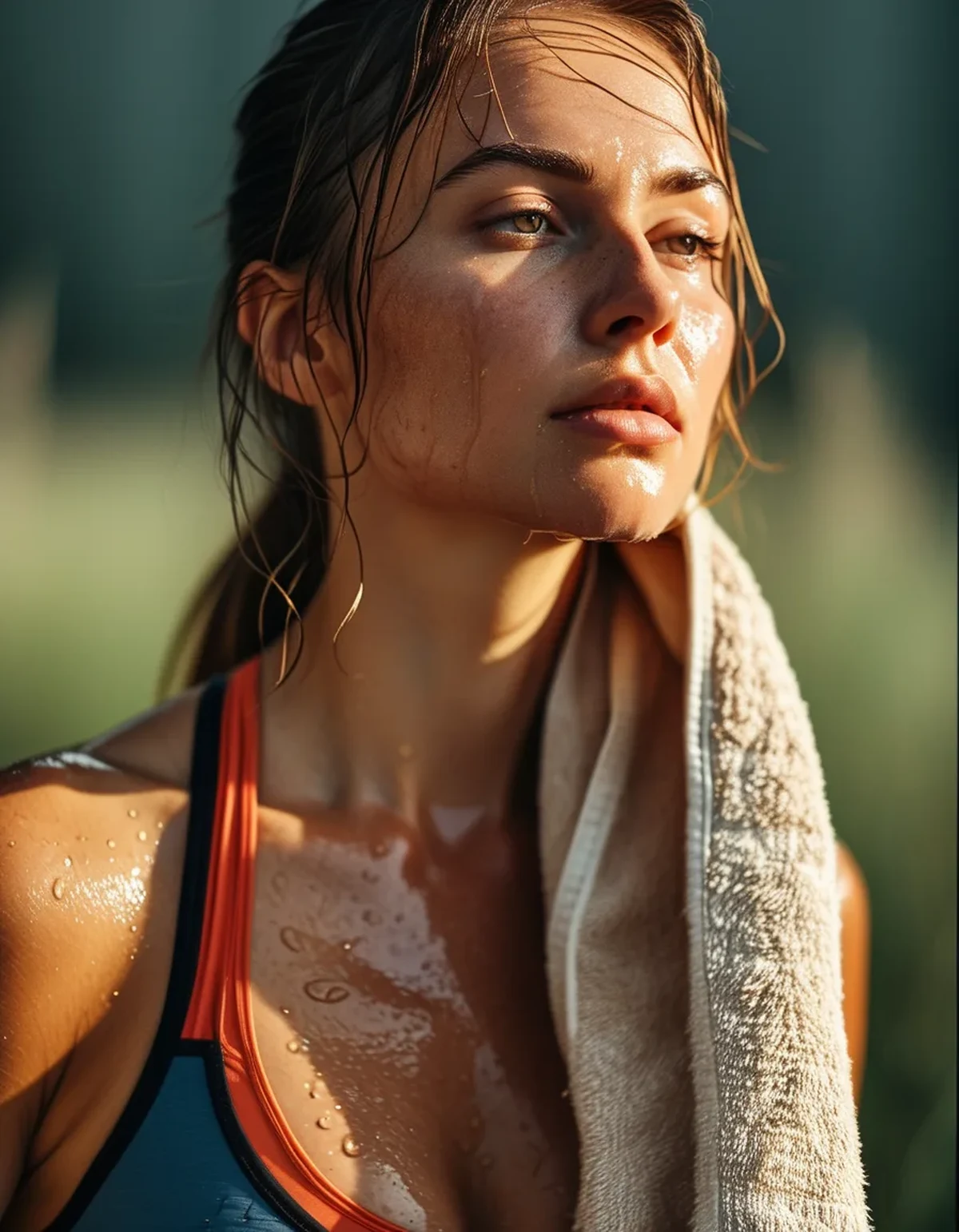
Humid sweat pools instead. When the air is already near saturation, sweat sits on the skin as liquid. Under a makeup layer, it accumulates at the interface between the sunscreen and the foundation, and that is a lubricated boundary.
Sunscreen is designed to stay mobile. For a sunscreen to form a continuous protective film, it must spread and re-level. Formulators build in emollients that keep it slightly fluid on the skin surface — which is a feature for protection and a serious problem for adhesion.
Oil and water both attack the bond. Sunscreen oils disrupt the powder-to-skin bond, and pooled sweat lifts what is left. Together they are considerably worse than either alone.
Body heat thins everything. Facial skin temperature rises several degrees during exercise, which lowers the viscosity of every oil-containing product on it. Products that felt set at room temperature become mobile again at working temperature.
And it is worst where you are warmest — the T-zone, the sides of the nose and the upper lip, which is exactly where people notice the slide starting.
What layering order actually works?
Six steps, and the waiting is the part everyone skips.
Skincare first, and let it absorb fully. Any leftover moisture or slip from a serum or moisturiser compounds the problem. If your fingers feel tacky, it is not ready.
Sunscreen next, applied properly and then left alone for a full 10 minutes. This is the single most effective change available. Sunscreen needs time to dry down into a film, and makeup applied over wet sunscreen mixes with it, pills, and fails within the hour. Use the time to do your hair.
A thin, translucent setting layer between sunscreen and makeup. A light dusting of finely milled powder gives the makeup something to grip that is not oil. This barrier layer is what makes the biggest difference in humidity specifically.
Then makeup, in the thinnest layer that achieves what you want. Thin layers adhere and thick layers slide. Two sheer passes outlast one heavy one by a wide margin.
Set again, focusing on the T-zone. Press powder in rather than sweeping it. Pressing bonds it to the surface; sweeping just moves it around.
Then stop touching your face. Every touch removes product and transfers oil. On a humid day, the film is fragile enough that touch is a genuine variable.
Seasonal note: late summer is the worst period of the whole year for this — humidity is still high while air temperatures start dropping, so people stop expecting makeup trouble at exactly the point where sweat evaporation is slowest.
What should you look for in the products?
Six product choices that matter more than the marketing claims.
Water-resistant is a regulated claim; sweatproof is not. Look for water resistant (40 minutes) or (80 minutes) on the sunscreen. Those numbers come from a defined test. Sweatproof and waterproof are not permitted claims in many markets, and where they appear they are unregulated.
A dry-touch or matte-finish sunscreen changes everything. These use different film formers and silica to reduce surface slip. For makeup wear in humidity, this single swap outperforms upgrading the foundation.
Mineral sunscreens often layer better. Zinc-based formulas frequently leave a drier, slightly powdery surface. The trade-off is potential white cast, which is a genuine consideration for deeper skin tones — a tinted mineral formula usually solves it.
Silicone-based primers help; silicone-heavy layers over each other do not. One silicone layer creates a grip surface. Stacking multiple silicone products creates a slippery mille-feuille that slides off as a sheet.
Powder sunscreen for reapplication. Reapplying liquid sunscreen over makeup wrecks it. A brush-on mineral powder SPF lets you top up protection and absorb oil in one step — and reapplication genuinely matters, because 80-minute water resistance means 80 minutes.
Skip anything described as dewy or luminous for humid training days. Those finishes are achieved with oils and light-reflecting emollients, which is the exact chemistry that fails here.
5 Mistakes Everyone Makes Layering SPF and Makeup
Mistake one: applying makeup within a minute of sunscreen. The film has not formed. This is responsible for most pilling, patchiness and early failure, and the fix is free — wait 10 minutes.
Mistake two: using less sunscreen so the makeup sits better. It works, and it also removes most of your protection. A thin sunscreen layer is not a compromise, it is an unprotected face. Change the finish of the sunscreen instead of the amount.
Mistake three: setting powder on top only. Powder over makeup helps. Powder between sunscreen and makeup is what actually stops the slide, because it addresses the slippery interface rather than the surface.
Mistake four: reapplying liquid sunscreen over makeup mid-session. It emulsifies everything underneath and you end up with neither. Use a powder or stick SPF for reapplication.
Mistake five: blaming the foundation. People replace foundation repeatedly while keeping the same dewy sunscreen underneath. The base layer determines the outcome far more than the top layer does.
And the bonus one: wiping instead of blotting. Wiping drags product off in streaks and leaves bare patches. Press a clean tissue or blotting paper straight down and lift. It removes sweat and oil while leaving pigment in place, and it is the difference between a touch-up and a restart.
FAQ: SPF and Makeup Questions, Answered
How long should sunscreen dry before makeup?
A full 10 minutes. Less than that and the film has not formed, which causes pilling and early slide.
Why does my makeup last on dry days but not humid ones?
Sweat cannot evaporate in humid air, so it pools at the interface between sunscreen and makeup and lifts the layer off.
Should I use less sunscreen to help makeup stay?
No. Change the sunscreen’s finish to matte or dry-touch instead. Thin application removes most of your protection.
What does water resistant 80 minutes actually mean?
That protection was maintained through a defined water immersion test for 80 minutes. It is a regulated claim, unlike sweatproof.
How do I reapply sunscreen without ruining my face?
Brush-on powder SPF or a stick formula. Both top up protection without emulsifying the layers underneath.
Does primer help?
One silicone-based grip primer helps. Stacking several silicone products creates a slip layer that shifts as a sheet.
Blot or wipe?
Always blot. Press straight down with a tissue and lift — wiping drags pigment off and leaves patches.
TL;DR:
- Humidity stops sweat evaporating, so it pools at the sunscreen-makeup interface and lifts the layer.
- Let sunscreen dry for a full 10 minutes before anything goes on top.
- Put a thin translucent powder layer between sunscreen and makeup, not just on top.
- Choose matte or dry-touch, water-resistant sunscreen over dewy finishes.
- Reapply with powder or stick SPF, and blot, never wipe.
Tomorrow, apply your sunscreen first and do your hair before you touch your makeup. That ten-minute gap fixes more than any product swap.
Keep Reading
This article is for general informational and styling purposes only. Fit, sizing, and product availability may vary.