Why Makeup Slides Off in 45 Minutes — and What Actually Holds
Quick Answer: Makeup fails during exercise because sebum production increases with body temperature, and oil dissolves the emollients in most complexion products. Sweat itself is mostly water and does less damage. The products that hold are the ones with no oil in them and nothing for oil to dissolve — water-and-silicone bases, powder pigments, and tubing mascaras.
You set it, you sprayed it, you used the long-wear foundation. Forty-five minutes into class it’s in your hairline and under your eyes anyway.
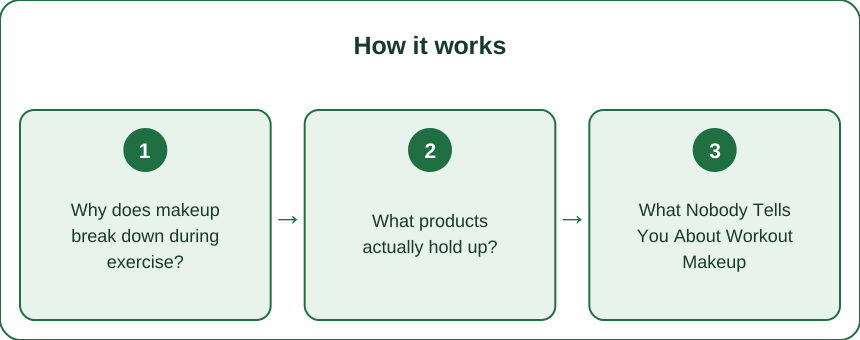
Why does makeup break down during exercise?
Three mechanisms working together, and only one of them is sweat.
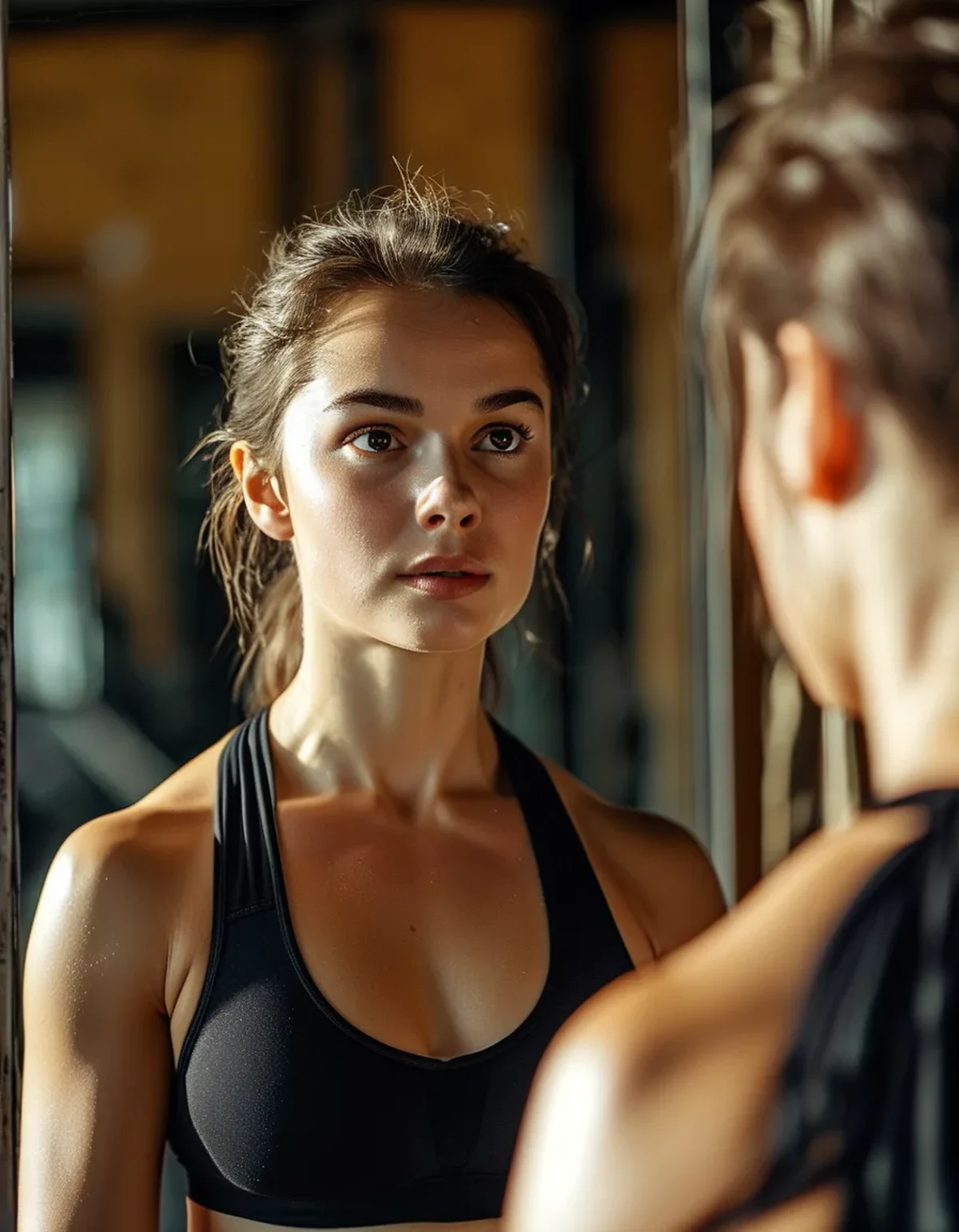
Sebum production increases with skin temperature. Warmer skin produces more oil, and exercise raises skin temperature substantially. Oil is a solvent for the waxes and emollients in most foundations, concealers, and cream products — it literally dissolves them.
Sweat provides the transport. Sweat is mostly water and doesn’t dissolve much on its own, but it carries the dissolved product downward. That’s the migration you see under the eyes and along the jaw.
Friction removes the rest. Wiping your face with a towel, hands, or a sleeve removes more product than either of the above. This is often the biggest single factor and the easiest to change.
Why long-wear foundations still fail: most achieve longevity through film-forming polymers that resist water. They resist water well and oil poorly. Since the actual solvent is oil, the water-resistance is solving the wrong problem.
This is also why the failure is patchy rather than uniform — it concentrates where sebum production is highest, which for most people is the forehead, nose, and chin.
What products actually hold up?
The pattern is consistent: no oil, nothing oil-soluble, and mechanical rather than adhesive attachment.
Base: skip liquid foundation entirely if you can. A tinted mineral sunscreen or a mineral powder foundation holds far better because there’s nothing for sebum to dissolve. If you need more coverage, a silicone-based, oil-free, transfer-resistant formula is the next best option.
Primer: a mattifying, silicone-based, oil-absorbing primer genuinely helps by giving sebum somewhere to go other than into the makeup. This is one of the few cases where primer changes the outcome meaningfully.
Brows: tinted brow gel over pencil or pomade. Gel adheres to the hairs mechanically rather than sitting on skin, so there’s nothing to slide. Waxy pomades melt at skin temperature — this is the most reliable single upgrade in the whole routine.
Mascara: a tubing mascara. It forms polymer tubes around each lash that come off with warm water and pressure but resist sweat and oil completely. Better than waterproof for this purpose, and much easier to remove.
Eyeliner: gel or a waterproof pencil, set with a matching powder shadow on top. The powder layer is what prevents transfer.
Cheek color: powder, not cream. Cream blush migrating down the face is one of the most common complaints and it’s entirely a formula issue.
Lips: a stain rather than a gloss or creamy lipstick.
What Nobody Tells You About Workout Makeup
Setting spray does less than powder. Sprays form a film that resists water; powder absorbs oil. Since oil is the actual problem, powder is doing the more relevant job. Use both if you like, but powder first and in the oily zones specifically.
Blotting beats reapplying. Blotting papers or a clean tissue pressed — not wiped — removes surface oil without removing product. Wiping removes everything and then reapplication is required.
The towel is the biggest single culprit. Pressing a towel to your face removes a large share of what’s left. Blot with the back of a wrist or a tissue instead, and save the towel for your neck.
Less product lasts longer. Thick application has more mass to migrate and cracks more visibly as it moves. A thin layer of the right product outlasts a heavy layer of anything.
Skincare underneath matters. A heavy occlusive moisturizer under makeup traps heat and oil and accelerates breakdown. A lightweight gel moisturizer, fully absorbed before makeup, holds much better.
Full removal afterwards is non-negotiable. Makeup plus sweat plus increased sebum sitting on warm skin is a well-documented recipe for congestion and breakouts. Even a micellar wipe in the changing room beats waiting until you get home.
The most effective option remains wearing less. Brows, tubing mascara, tinted sunscreen, and a lip stain is a five-item routine that survives almost anything and takes four minutes.
Is there a routine that survives a full class?
Yes, and it’s shorter than what most people are currently doing.
The four-minute version:
- Lightweight gel moisturizer, fully absorbed
- Tinted mineral sunscreen or mineral powder foundation
- Powder blush, pressed not swept
- Tinted brow gel
- Tubing mascara
- Lip stain
- Translucent powder on the T-zone only
That routine has essentially nothing that oil can dissolve and nothing that requires reapplication. It survives an hour of hard work and a shower is enough to remove most of it, except the mascara which needs warm water and pressure.
If you need more coverage — for a class you’re teaching, or an event afterwards — add a silicone-based transfer-resistant foundation applied thinly and set thoroughly with powder. Expect to blot once mid-session.
Pack: blotting papers, a spare brow gel, and a micellar cleanser or wipes for after. That’s the entire kit and it fits in a small pouch.
Reapplication strategy for going straight from a session to something else: blot, dust powder, redo lips, redo brows. Four steps, ninety seconds, and it looks intentional rather than reconstructed.
What about skin health?
Worth taking seriously, because the conditions during exercise are exactly the ones that cause problems.
Warm skin, increased sebum, sweat, occlusive product, and friction is a combination that reliably causes congestion in people prone to it. The mechanism is well understood and the risk is real.
What reduces it:
- Wearing less, particularly less base product
- Choosing non-comedogenic, oil-free formulas
- Removing makeup as soon as possible afterwards — within 30 minutes is a reasonable target
- Not touching your face during the session
- Clean equipment and a clean towel; shared mats and machines are a genuine transfer route
- Washing hair bands and headbands, which trap sweat against the hairline
The hairline and jaw are where exercise-related breakouts most commonly appear, because that’s where sweat pools and where headbands and collars create friction.
If you’re prone to breakouts and want to wear makeup to the gym: brows and mascara only is the lowest-risk approach that still looks like something. Neither is on the skin, so neither contributes to congestion.
This is general information, not medical advice. Persistent or severe acne is worth discussing with a dermatologist.
FAQ: Workout Makeup Questions, Answered
Is waterproof mascara better than tubing?
For sweat resistance they’re comparable, but tubing is much gentler to remove — warm water and gentle pressure rather than oil-based remover and rubbing at the lash line. Given how often you’d be removing it, tubing is the better choice for regular exercise.
Does setting spray work at all?
Somewhat. It helps with water resistance and melds powder into the skin. It just isn’t the main lever, because the primary solvent is sebum rather than sweat. Powder in the oily zones does more.
Can I just reapply after?
Yes, and it’s often the cleanest approach — go bare-faced, remove sweat, and apply after. It takes less total time than trying to preserve a full face through a session, and the result looks better.
TL;DR:
- Sebum, not sweat, dissolves makeup — so oil-free and powder formulas outlast “waterproof” ones.
- Tinted brow gel and tubing mascara are the two highest-value swaps.
- Blot, don’t wipe; towels remove more makeup than sweat does.
- Remove everything within about 30 minutes afterwards to avoid congestion.
The routine that survives an hour of hard work is shorter than the one that doesn’t. Brows, tubing mascara, tinted sunscreen, powder blush, lip stain — four minutes, and it’s still there at the end.
Keep Reading
This article is for general informational and styling purposes only. Fit, sizing, and product availability may vary.