Why Your Waterproof Eyeliner Survives Sweat But Not Tears
Quick Answer: Waterproof formulas are engineered to resist plain water and salt at the concentration and volume typical of sweat, but tears carry a different composition — including oils from the eye’s meibomian glands — that can break down the same waterproof polymer film water alone wouldn’t touch. It’s a chemistry mismatch, not an inconsistent product.
Both sweat and tears are salty water on paper. In practice, they’re different enough fluids that a formula tested and marketed against one doesn’t guarantee performance against the other.
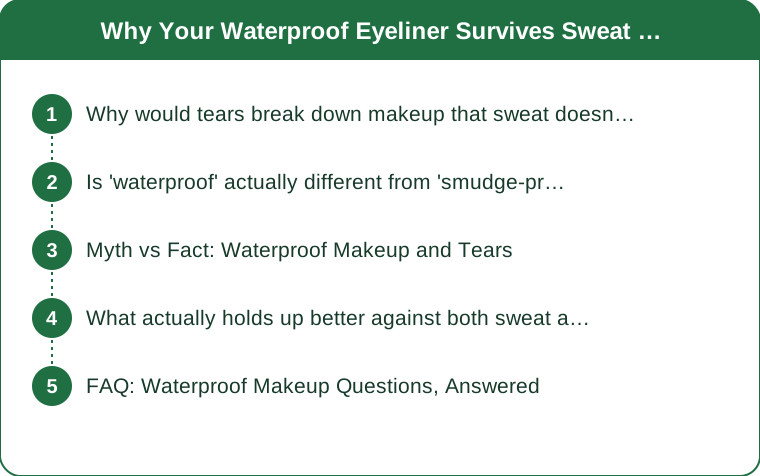
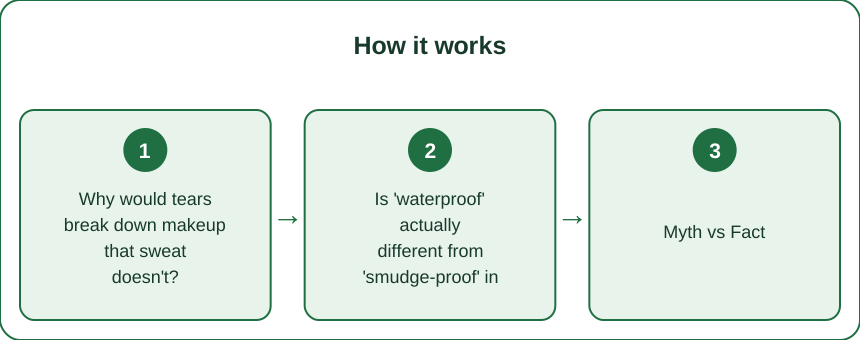
Why would tears break down makeup that sweat doesn’t?
Tears aren’t pure water — they include a lipid (oil) layer produced by glands around your eyes, designed to slow tear evaporation on the eye’s surface. That oil layer is exactly the kind of solvent that can dissolve or loosen waterproof polymer films, which are built to resist water-based liquids specifically, not oil-based ones.
Sweat is closer to a simple saline solution with minimal oil content, which is precisely the profile ‘waterproof’ formulas are tested against — so it makes sense sweat resistance doesn’t guarantee tear resistance.
Is ‘waterproof’ actually different from ‘smudge-proof’ in a meaningful way?
Yes. Waterproof specifically refers to resistance against water-based liquid contact, tested against something like plain water or diluted saline. Smudge-proof or transfer-resistant formulas are tested more against friction and touch, not liquid immersion at all.
A formula can be genuinely excellent at one and mediocre at the other — checking which specific claim a product makes (not just the word ‘waterproof’ generally) tells you more about what it will actually survive.
Myth vs Fact: Waterproof Makeup and Tears
Myth: All waterproof formulas perform identically against tears. Fact: Formulas vary in their oil-resistance specifically, and this is rarely tested or advertised separately from general water resistance, so performance against tears varies significantly by product even within the ‘waterproof’ category.
Myth: If it survives a sweaty workout, it’ll survive crying. Fact: These are different liquid compositions with different solvent properties — surviving one doesn’t predict surviving the other.
Myth: Waterproof formulas are always more irritating to sensitive eyes. Fact: Irritation depends on specific ingredients, not waterproofing itself — some waterproof formulas are formulated to be gentle despite their water resistance.
What actually holds up better against both sweat and tears?
Silicone-based waterproof formulas tend to perform more consistently across both sweat and tear exposure than older wax-based waterproof formulas, since silicone polymers resist both water and, to a meaningful degree, oil-based disruption better than wax alone.
For high-stakes situations involving both possibilities (an emotional outdoor event, for example), a primer specifically designed to lock in eye makeup underneath your waterproof product adds a second barrier layer that helps against both liquid types.
FAQ: Waterproof Makeup Questions, Answered
Is there a way to test how tear-resistant a product actually is before an important event?
A rough at-home test: apply the product, then dab (don’t rub) a drop of a mild oil like a makeup remover oil onto it after it’s dry — significant immediate breakdown suggests it will struggle more against tears specifically.
Does eye makeup remover formula matter for waterproof products?
Yes — oil-based removers work better on waterproof formulas precisely because they exploit the same oil-based breakdown mechanism that causes the tear-smudging issue, which is a helpful removal property, not a flaw.
Are silicone-based waterproof formulas more expensive generally?
Often somewhat, yes, though pricing varies widely by brand — checking the ingredient list for dimethicone or similar silicone compounds is a more reliable indicator than price alone.
TL;DR:
- Tears contain an oil layer that plain sweat doesn’t, and that oil can break down water-resistant (but not oil-resistant) formulas
- “Waterproof” and “smudge-proof” are different, separately-tested claims — check which one a product actually makes
- Silicone-based waterproof formulas generally resist both sweat and tears more consistently than older wax-based ones
- A separate eye makeup primer adds a second protective layer against both liquid types
Sweat-proof doesn’t guarantee tear-proof — they’re chemically different fluids, and your makeup formula can tell the difference even if you can’t.
Keep Reading
This article is for general informational and styling purposes only. Fit, sizing, and product availability may vary.