Why Your 'Waterproof' Mascara Still Melts Halfway Through a Hot Workout
Quick Answer: ‘Waterproof’ and ‘sweatproof’ aren’t the same claim — waterproof formulas resist water droplets but many still break down under the combination of heat, oil, and rubbing (from wiping sweat) that a real workout produces, so you need a formula specifically tested against sweat and friction, not just splashes.
You did the smart thing and bought waterproof. It just wasn’t tested for what actually happens to your face during a hot spin class.
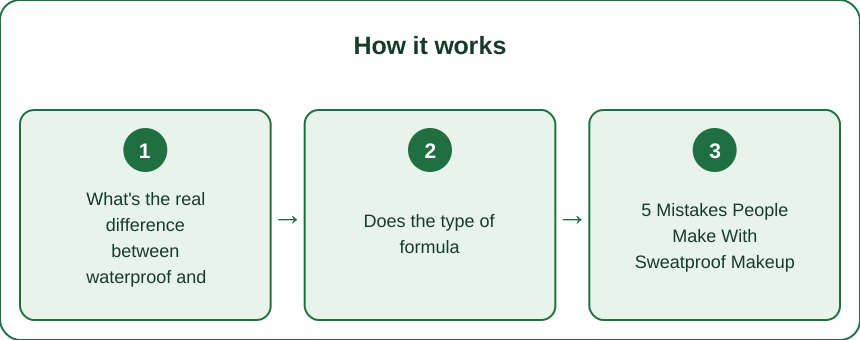
What’s the real difference between waterproof and sweatproof claims?
Waterproof testing typically involves resistance to plain water contact — a splash, a rinse, tears. Sweat is chemically different: it carries salts, oils, and a higher temperature that softens wax-based formulas faster than plain water does.
Add in the friction of a gym towel or your own hand wiping your brow, and a formula that easily passes a ‘waterproof’ splash test can still slide right off under real workout conditions.
Does the type of formula (wax vs. polymer) actually matter here?
Yes — polymer-based formulas (often labeled ‘tubing’ mascaras) form a flexible tube around each lash rather than a wax coating, and they tend to hold up far better under heat and sweat because they don’t soften the same way wax does.
Wax-based formulas can still claim ‘waterproof’ and pass that test, but they’re the ones most likely to melt specifically under gym heat.
5 Mistakes People Make With Sweatproof Makeup
Mistake 1: Assuming ‘waterproof’ automatically means ‘sweatproof.’ They’re tested against different conditions.
Mistake 2: Applying a thick coat before a hot class. More product means more material to break down and migrate.
Mistake 3: Wiping sweat instead of blotting. Wiping drags softened product across the skin; blotting lifts moisture without smearing it.
Mistake 4: Skipping a setting spray or primer. These add a barrier layer that slows down heat penetration to the makeup underneath.
Mistake 5: Not checking ingredient lists for ‘tubing technology.’ This is the single biggest predictor of actual sweat resistance.
Is there a way to test a mascara’s sweat resistance before a class?
A simple at-home check: apply as usual, then hold a warm washcloth near (not on) your eyes for 60-90 seconds to simulate workout heat, and see if it shifts. A true tubing formula will still remove cleanly with warm water afterward but won’t smear during the heat test.
This takes two minutes and tells you more than the label claim alone.
FAQ: Sweatproof Makeup Questions, Answered
Are tubing mascaras harder to remove than regular waterproof ones?
They’re actually usually easier — warm water alone can slide the tubes off, no harsh makeup remover required.
Do sweatproof formulas work for all workout intensities?
High-intensity, high-heat classes (hot yoga, spin) are the real stress test — a formula that holds up there will hold up for lighter activity too.
Is powder setting spray better than liquid for sweat resistance?
Liquid setting sprays with a mattifying, long-wear formula generally outperform powder alone for sweat, since powder can shift once skin gets wet.
TL;DR:
- ‘Waterproof’ and ‘sweatproof’ are tested against different conditions — sweat’s heat and oils break down formulas water alone doesn’t
- Polymer/tubing formulas resist heat far better than wax-based waterproof formulas
- Blot sweat instead of wiping to avoid smearing softened product
- A 60-90 second warm washcloth test at home reveals real sweat resistance before you rely on it in class
The melt isn’t a personal failure or a fluke — it’s a formula mismatch, and it’s fixable with the right ingredient check.
Keep Reading
This article is for general informational and styling purposes only. Fit, sizing, and product availability may vary.